
Parish Life
“I love the openness of this congregation. It made my commitment possible, to appreciate how the church includes all members, which translates into being committed to making sure our new rector succeeds.”
We are Engaged and Enthusiastic
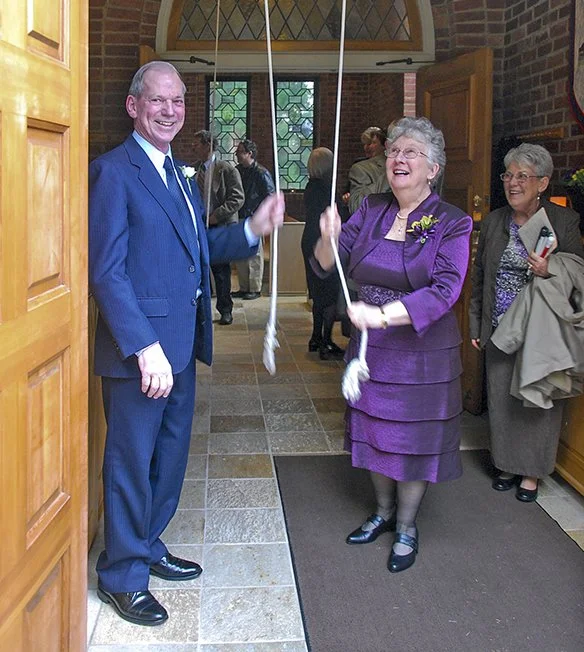
Our congregation has long understood that true welcome is more than a greeting at the door. True welcome provides ways to connect, to be included, to belong. We are blessed by a welcoming congregation with committed greeters, ushers, a welcome table, coffee hour teams, and a committed vestry. Members report that what first drew them into the community was being warmly welcomed, often on their very first visit. People tell us they feel seen, accepted, and cared for, including those with diverse backgrounds, from other faith traditions, and people at various stages of their spiritual journey. Many described the experience as one of being genuinely noticed and accepted, which made them want to return—and ultimately to stay.
St. Barnabas is a highly energetic and high vitality community. In a recent survey in which one hundred percent of parishioners responded, twenty–five percent stated that they were attending church more frequently than they had three years ago compared to nine percent who are attending less. How has this happened? During the Covid years, the church came together to create a robust online Sunday school. Parishioners volunteered to teach and to deliver Sunday school activity packages to families to keep kids connected to God and the outside world. Coming out of Covid, our previous rector was very active in engaging the community with creative worship services first from her home, then on video from the church, then bringing back in person gatherings outside, followed by meeting in our more roomy parish hall, then finally back inside the church with masks and air purifiers. A parishioner said, “Coming out of Covid was challenging, but bringing people back felt like a beautiful resurrection.”
During our transition time, we have identified some potential untapped resources for bringing in more diversity of age and life experience, including our contemplative wisdom groups, with many nonchurch members in attendance, and our day school. We have also identified more of what this population wants—more opportunity for outward facing ministries to affect people on the edges of society, and more connection with one another.
Community is at the Center
St. Barnabas members feel that the experience of being specifically asked to be a part of something—a ministry, an outreach group—has connected them to the parish. Being personally invited to participate in one of the ministries or activities has been the key for many parishioners to really connect with people and become engaged in the church. Others described a spirit of “paying it forward,” feeling moved to give back after benefitting from a ministry such as a memorial reception held after a memorial service.
Building on these great beginnings, the parish has embarked upon a more formal welcoming ministry—the Newcomer’s Ministry—using the Episcopal program Invite Welcome Connect (IWC), a ministry endorsed by the Rt. Rev. Philip LaBelle, our newly elected diocesan bishop, and by retired Presiding Bishop Michael Curry. This past spring, the IWC program was introduced to our church to help us deepen the ways we offer connection and belonging. This ministry reflects our growing awareness that people need more than friendliness; they need a way to feel included, seen, and become rooted in community—with a true sense of belonging. Belonging grows through relationships, invitations, and shared life and must be a team effort embraced by the entire congregation. Our participation in IWC reflects our commitment to becoming even more intentional about this work. IWC can also help with our challenge to broaden our age and life diversity by welcoming younger adults, families, and age diversity. We are working on being more intentional as we explore ideas that will move us closer toward those goals.
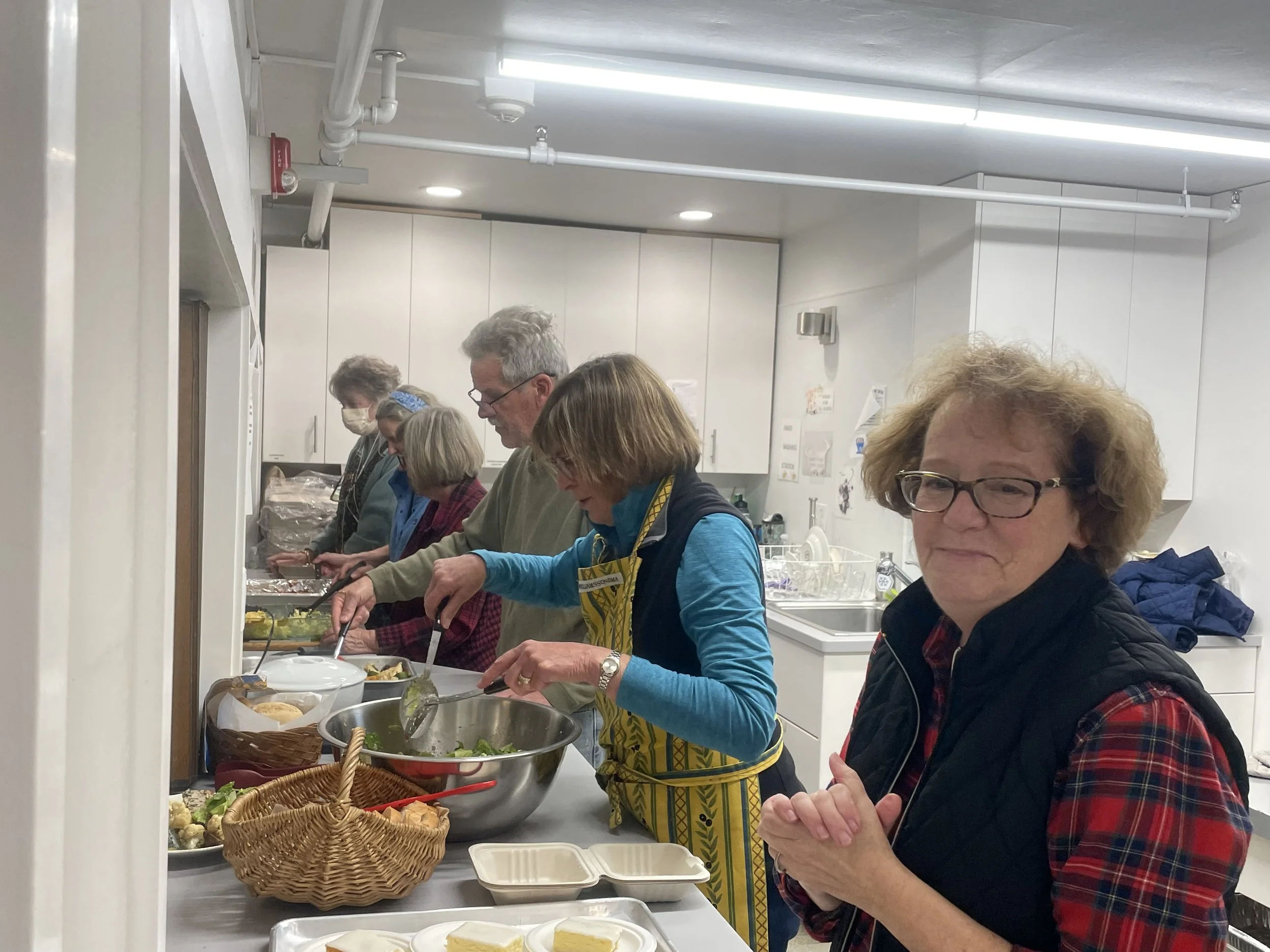
Our Coffee Hour Ministry—which works in teams to provide refreshments at the gatherings after each service—has grown in membership as more and more parishioners stay after the service each week to socialize. Although the more formal welcome table is also set up during this time, coffee hour team members offering homemade cookies and coffee serve as another arm of the welcoming ministry. Repeatedly, parishioners described loving, supportive relationships that sustained them through grief, illness and life transitions.
Other ministries that make up our parish life include Secret Prayer Partners, Stewards of Creation, Godly Play, Supper Clubs, Centering Prayer, Sacred Ground, and Healing Services. “The whole spirit in our congregation makes people want to become as involved as possible,” is the one major driver that energizes the people of St. Barnabas.
While our ministries are varied and energized, we recognize the importance of keeping them grounded in a shared vision that speaks to the hearts of the congregation. Involvement in the church community and the outer community—through the many service and outreach opportunities—are viewed as a shared purpose and a way to grow our faith.
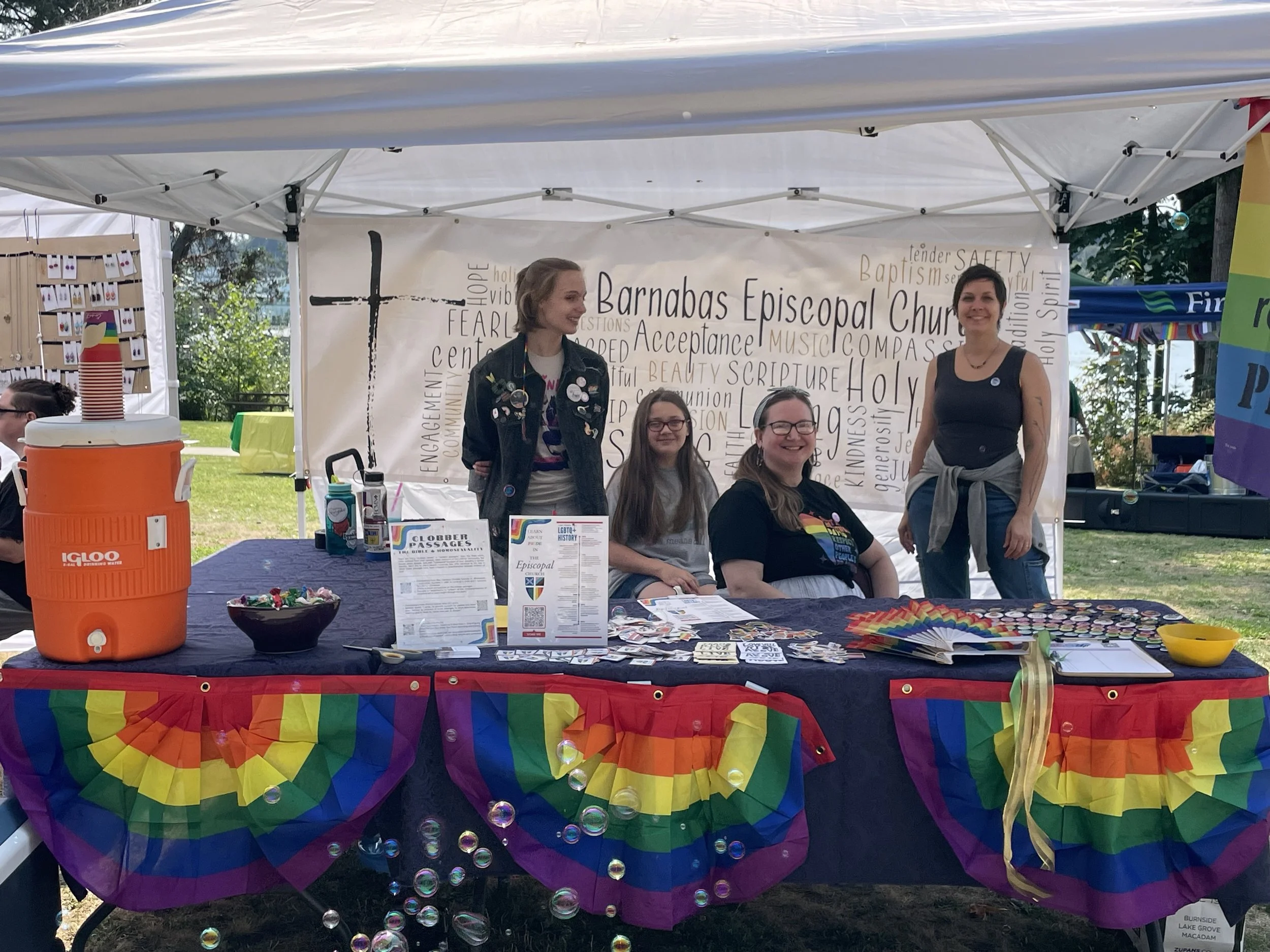
Our core values—hospitality, inclusiveness, and spiritual practice—guide us as we strive to honor each person’s unique spiritual journey while recognizing the patterns that connect us. This is especially true in pastoral care, where loving, supportive relationships with fellow parishioners and clergy become essential. Presence and attentive listening from both clergy and laity are central to the care we continue to offer to sustain parishioners through grief, illness, and major life transitions. Funerals, shared meals, and healing services were named as touchstones of connection and care.
Deacon Dan Fowler and a lay person lead the Pastoral Care Ministry at St. Barnabas. This work is about paying attention to the people around us, becoming aware of their needs, and extending Christian community beyond the walls of the church. Deacon Dan leads three weekly services at senior living facilities on the island. The lay–led Caring Community Network organizes teams of people who prepare meals, offer rides, write notes, take communion, and visit people who can’t get to church. They also offer Christian Reiki healing and knit prayer shawls.
Our Worship
St. Barnabas offers a variety of opportunities for worship. There are two Eucharist services every Sunday. Traditionally, they have met at 8 a.m. and 10 a.m., but we are experimenting with 8 a.m. and 10:30 a.m., allowing time for educational programs and other presentations to be scheduled between, calling it “The Bridge.”
The 8 a.m. liturgy is Rite I from The Book of Common Prayer and has traditionally been a quiet and meditative service with an organ prelude and hymns. Attendance averages around twenty–five. There is currently an effort to increase the amount of music, and a new drop-in choir, “Early Risers,” sings once a month.
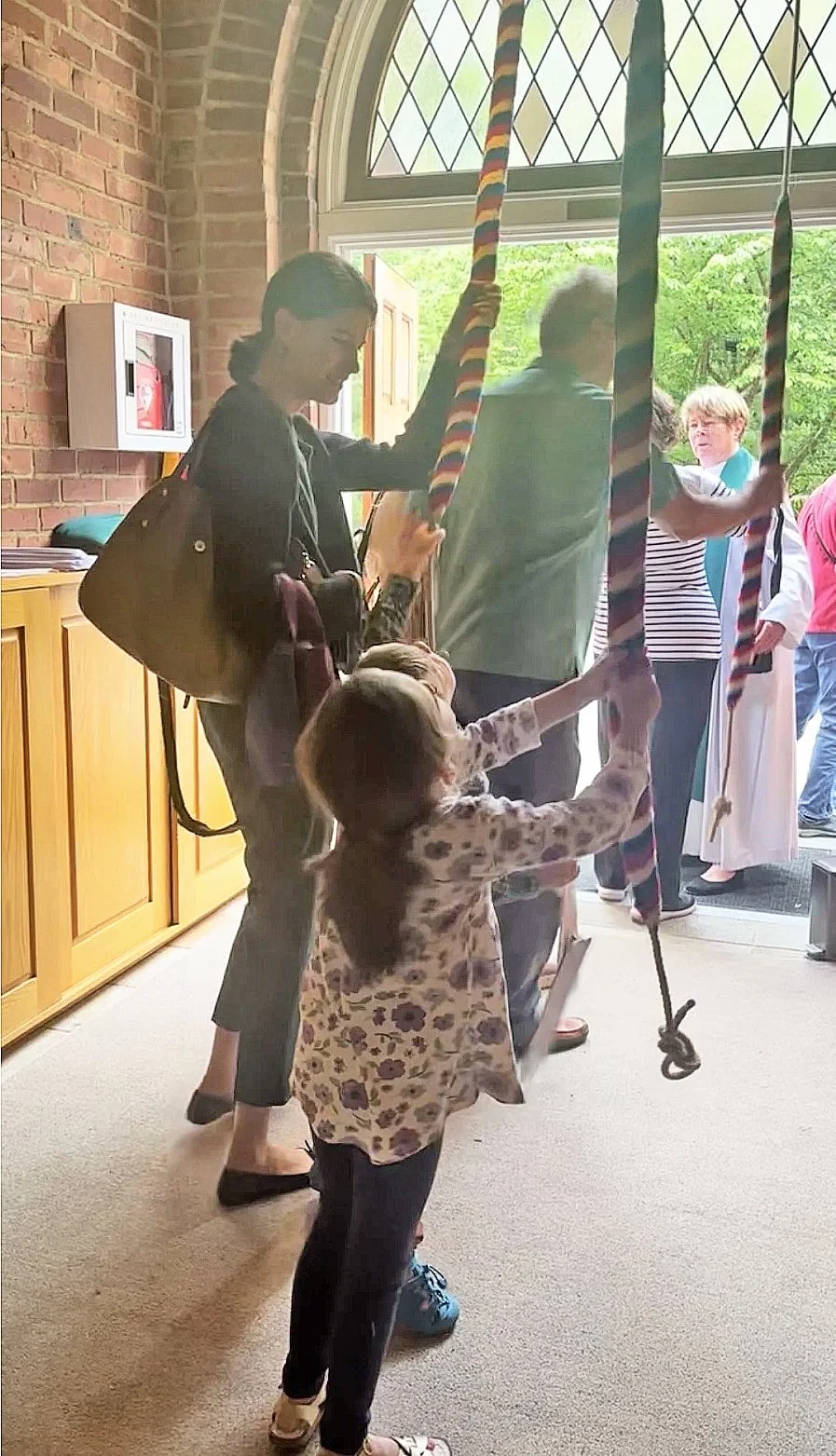
The 10:30 a.m. liturgy is Rite II from The Book of Common Prayer and sees an average of just under 100 people attending each week. This service is also streamed and recorded on YouTube—one gift of Covid—with between twenty–five and thirty people watching online. The fourteen–member choir, which includes two paid section leaders, leads the singing during the academic year. Between the Liturgy of the Word and the Liturgy of the Table is a welcome to visitors, announcements, and blessing of those celebrating birthdays and anniversaries. Only at St. Barnabas will you hear the congregation proclaim, "Nice Start!" after couples share how many years they have been married, whether one year or seventy–three (and yes, we do have a couple who have been married that long). Another long–standing tradition dictates that everyone wait in the pews until the postlude has finished. As parishioners leave the church, almost everyone pulls on the ropes in the narthex to ring the bells in the bell tower.
Schola Nova, a treble choir, sings Vespers at 6 p.m. the third Sunday of each month during the program year. Women from the congregation as well as the larger community read scripture and sing traditional plainsong, anthems, psalms, and chants. This year they commemorate a different female saint at each service. This meditative, restful service is popular with parishioners as well as many from the larger community.
A lay-lead Centering Prayer group gathers on Tuesday mornings at 9 a.m.
Thursday morning, a Healing Service of Holy Eucharist is held in the sanctuary at 9 a.m. This time of readings, prayer, blessing, and anointing also holds time for reflections and discussion. This has taken the form of lively questioning and exploration, but can also settle into moments of quiet introspection.
During the Covid lockdown, we started lay led Zoom Compline Services, three nights a week at 9 p.m. We continued on Zoom when Covid ended; a loyal group continues to this day, averaging between eight and fourteen each night.
Seasonal Celebrations
Advent services begin with lighting the Advent wreath; a different group of people comes up to light the candles and give readings each Sunday. Christmas Eve, we have three services—a children’s service and two traditional services, all eucharists, and there is a simple eucharist Christmas day. A contemplative service is held shortly before Christmas for people who are grieving or just looking for a quieter Christmas service.
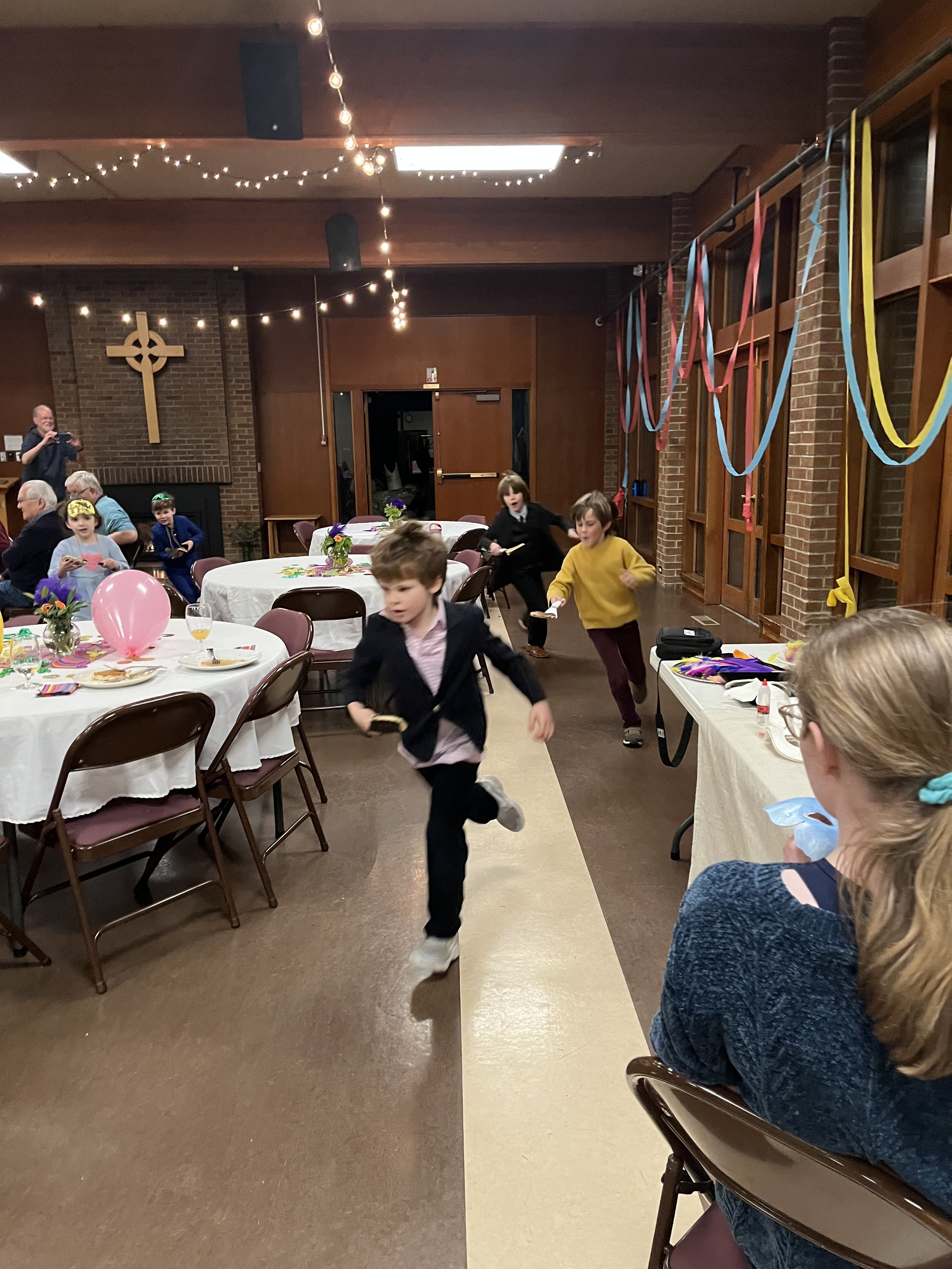
Shrove Tuesday isn’t celebrated in the worship space, but in the parish hall which comes alive with people making and eating pancakes, sausages, and homemade apple sauce. There is a lot of dancing, crafts, and, usually a pancake race to boot.
Wednesday evenings during Lent (not including Ash Wednesday or Holy Week) we have well–attended soup suppers followed by a study program, led by the rector.
Beginning with Palm Sunday, the church is always busy with the services of Holy Week. The last two years saw Tenebrae added the evening of Palm Sunday. A service of reconciliation has been offered on Tuesday. Maundy Thursday is celebrated with an agape meal followed by foot–washing. Good Friday features two services (noon and an evening service) with eucharist from the reserved sacrament. Stations of the Cross are set up and bulletins are available for a self–guided observance at each spot. This past year, morning prayer with the Stations of the Cross was held each weekday morning.
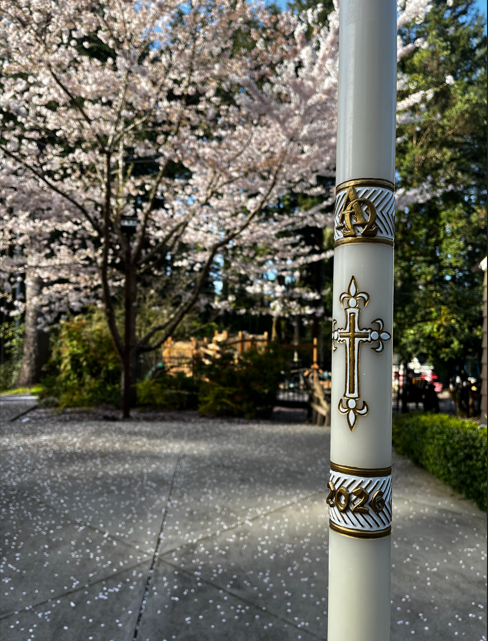
Easter starts Saturday evening with The Great Vigil, followed by two services Easter morning, with an Easter egg hunt between.
While summers are more relaxed, we do have two summer traditions. In June we celebrate St. Barnabas. It doesn’t need to be on his feast day (June 11) but it does have to be followed by strawberry shortcake at coffee hour (the strawberries being a tribute to our island heritage). August usually sees an outdoor service followed by potluck picnic. Years back it was a salmon bake, but more recently we’ve enjoyed “Church on the Beach” held at Fay Bainbridge Park on the island.
This fall, along with the wider Episcopal Church, we did a series of services with a creation theme, organized by our interim.
Progressive Theology Grounded in Traditional Liturgy
Ninety percent of our parishioners are pleased with the traditional Anglican music and value a strong sermon. A weekly Rite I service is a high priority and serves as an anchor for a core group of parishioners. The people of St. Barnabas are “flexible” but also tend to be more “settled,” characterized by welcoming change when there is a clear purpose. During our transition time, our interim has introduced some changes to the structure of our worship days, which has been well received overall, causing no reduction in attendance. Changing the time of the principal service was justified by creating “The Bridge," which is a new time for attendees of both services to gather between services for adult formation and other church–wide activities.
Grounded in our traditional liturgy, St. Barnabas has a progressive theology, with emphasis on welcoming all, including groups traditionally excluded, and those from other faith traditions. As a community, we value openness to questioning and exploration.
Our Staff and Clergy are
Integral to Our Mission
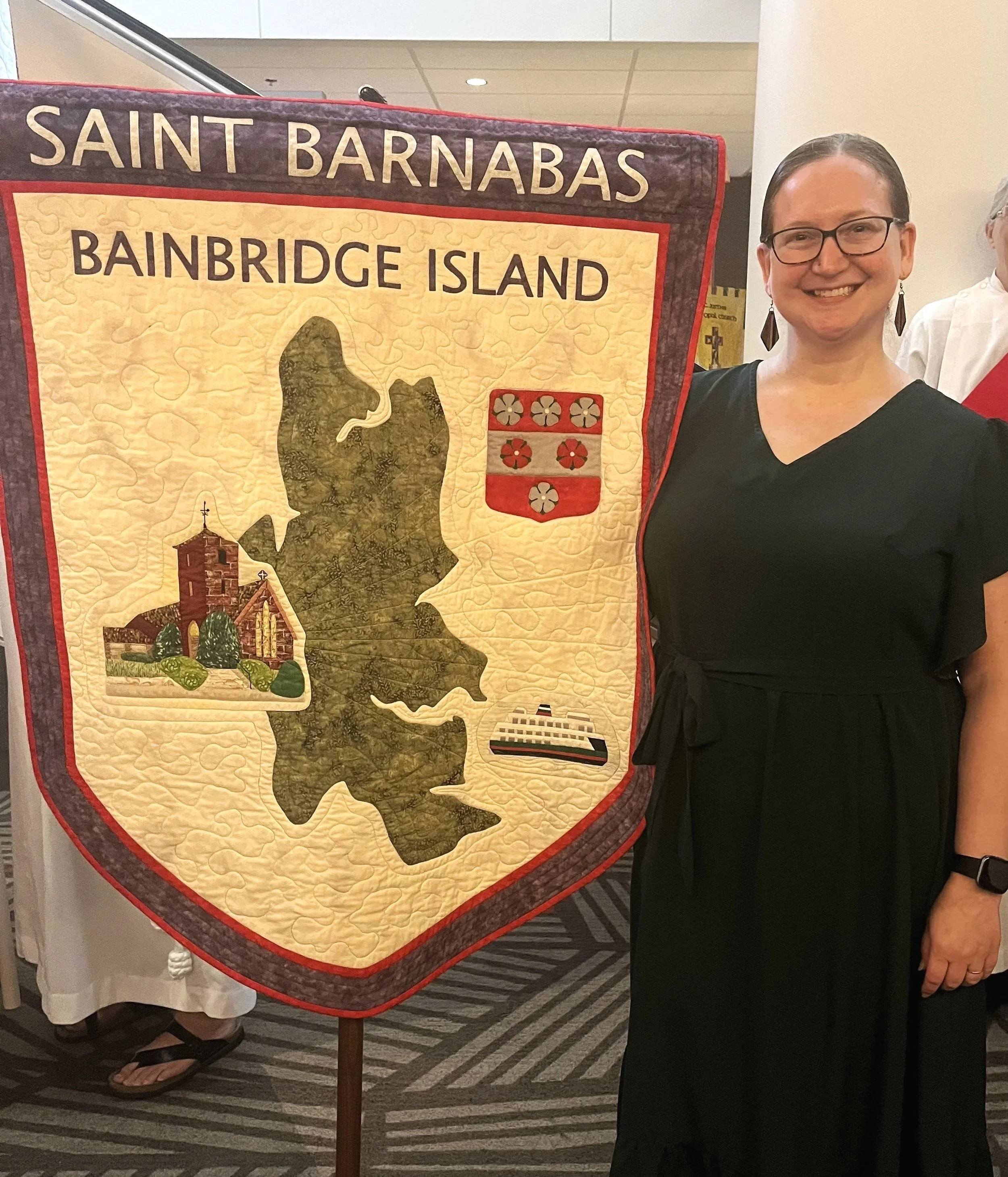
Our parish employs several indispensable staff members, including Sheila Bristow, our music director; Etienna Wright, our parish administrator and family ministries coordinator; Tim Shelly, our kitchen manager; George Cole, our sexton; Niki Basile, our bookkeeper; and Julia Rose, our day school director. Each of these exceptional staff members is a vital part of the mission of St. Barnabas. Several of them have expanded on the basic tasks of their job and created new programs and ministries.
Currently St. Barnabas is served by an interim, the Reverend Dianne Andrews, and our beloved deacon, The Rev. Dan Fowler, who has served for twenty years.
Four priests among us—Rev. Nancy Tiederman, Rev. Dr. Judith R. McDaniel, Rev. Patricia Rome Robertson, Rev. Steven Best—offer their experience and expertise in many ways throughout the activities of our parish.
Our vestry consists of nine lay members, with three new members elected annually. The are ably supported by a clerk, treasurer, and chancellor, who all attend monthly vestry meetings.
We are here to stay.
St. Barnabas has been a steady community through many transitions over the decades and remains strong. We are excited to welcome a new rector to walk beside us as we continue to discern what God is calling our community to be in the world, and we also are happy to welcome you to join us!